
RESETTING NIGHT WORK FOR 2026
Resetting night work for 2026
January is the perfect time to review current practices and plan for the year ahead. For organisations that rely on night working teams, it’s also an ideal moment to pause and ask an important question: are we really doing enough to support the people who keep things running while the rest of the workforce sleeps?
If you want to show your night workers that their concerns and challenges matter, the first step is gaining a clear, honest picture of what those concerns and challenges actually are. Without this understanding, even well-intentioned initiatives can miss the mark.
Understanding workers – including hearing directly from teams themselves – is essential to building meaningful support and a positive, inclusive culture. Night work comes with distinct pressures, and those pressures are often less visible to senior leaders who operate during daytime hours.
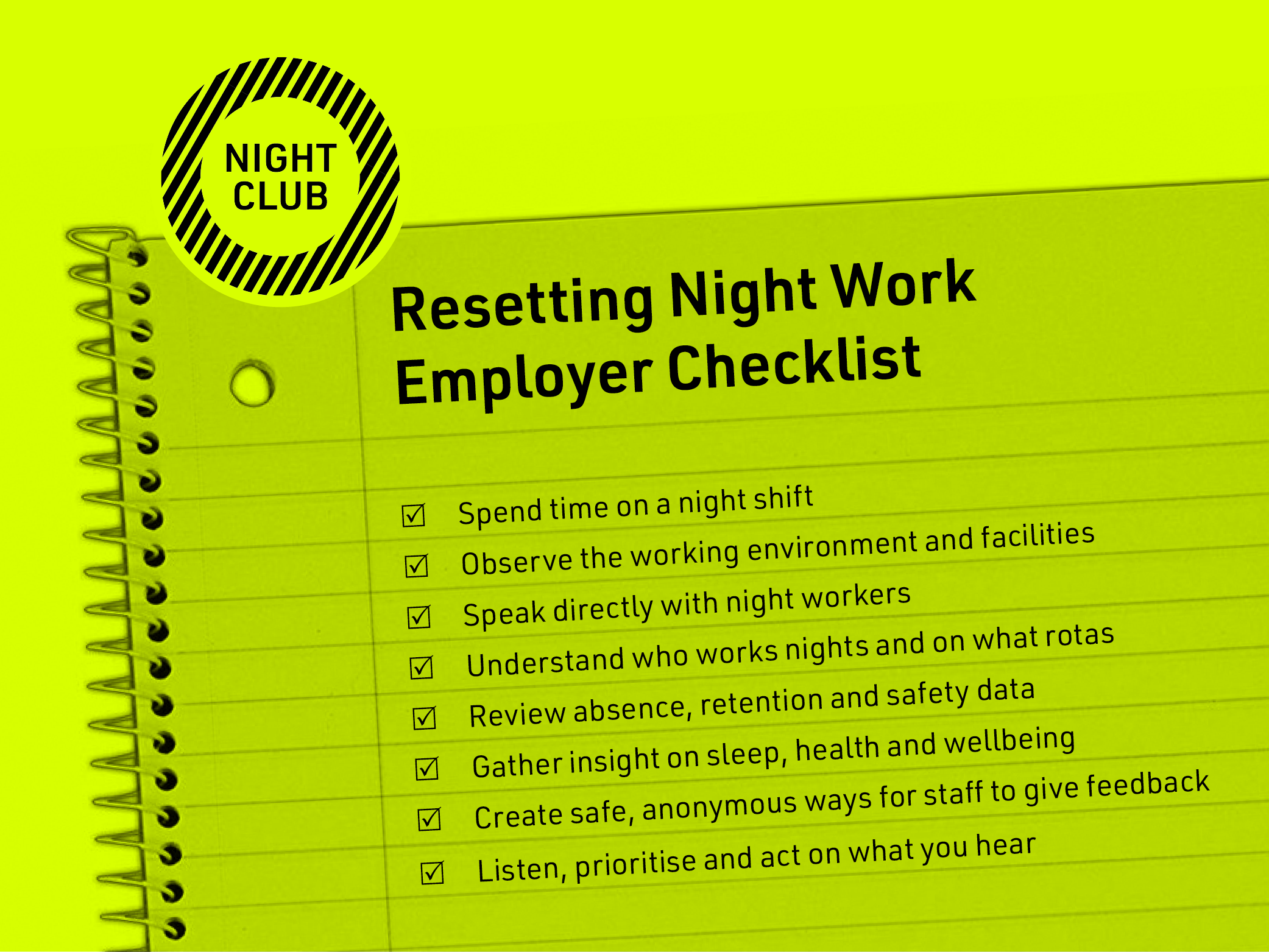
Start by seeing it for yourself
Our number one recommendation is simple but powerful: work a night shift.
Spending time on the night shift allows you to observe the environment, culture and practical realities first-hand. Take note of things like temperature and lighting, what food and drinks are available, and whether there’s a comfortable, welcoming space for staff to take a break. These details may seem small, but they have a significant impact on wellbeing, alertness and morale.
Just as importantly, make time for face-to-face conversations with your team. Even a brief “How did you sleep?” or “How are you finding the rota?” can open up valuable lines of communication. These informal moments often surface insights that wouldn’t appear in a survey response.
This lived experience, combined with robust data, will help you evaluate the current lay of the land and focus on the changes that will make the biggest difference.
Feedback and data to explore
To build a meaningful picture of your night-working population, we recommend gathering a mix of quantitative data and qualitative insight. This information will likely come from multiple sources and may take time to collate, but the investment is worthwhile if you want to target initiatives and wellbeing support effectively.
Foundational data
How many shift workers you employ, on which rota patterns and across which locations (including employed staff and others such as agency workers). Where possible, link this to diversity data to understand shift work health in the context of EDI.
Absence levels, compared with day staff if possible.
Retention levels, compared with day staff if possible.
Accident or incident levels, compared with day staff if possible.
Any pre-existing night worker-specific policies or provisions already in place.
Sleep, health and wellbeing data
Sleep duration and sleep quality while working nights or shifts.
Prevalence of long-term health conditions.
Broader workplace wellbeing measures, such as job satisfaction, happiness, stress and sense of purpose.
Feedback from workers
An open question inviting honest feedback on the experience of working nights or shifts, alongside opportunities to suggest changes.
Topic-specific prompts covering schedules, the working environment, health and wellbeing support, diet and exercise, and workplace culture.
Taken together, this information creates a strong evidence base, allowing you to move beyond assumptions and focus on what really matters to your workforce.
Employee voice matters
Giving workers the opportunity to share their views and feel heard by management – often referred to as ‘employee voice’ – has been shown to boost engagement, productivity and even creativity. For night workers in particular, being heard can counter feelings of isolation or being the ”forgotten shift”.
There are many ways to gather employee voice, from staff surveys and listening events to forums, focus groups or feedback collected through team meetings. Where trade unions are present, they can also play an important role in representing and relaying the views of their members.
A key learning from delivering our Night Club programme is the value of independence and trust. Having an external partner who is perceived as impartial, alongside strong guarantees of anonymity, can help create a safe space for more vivid, direct and honest feedback. This depth of insight is often what enables real, lasting change.
Getting off to the best start
Resetting night work for 2026 isn’t about quick fixes or one-off initiatives. It’s about taking the time to understand your workforce, listening carefully to their experiences, and using both data and dialogue to guide your decisions.
By starting the year with curiosity, empathy and evidence, organisations can move from simply managing night work to genuinely supporting night workers. The result is not only healthier, more engaged teams, but a stronger culture that recognises the value of every shift – day or night.